

What Defines Heirloom Glassware: A Collector's Guide
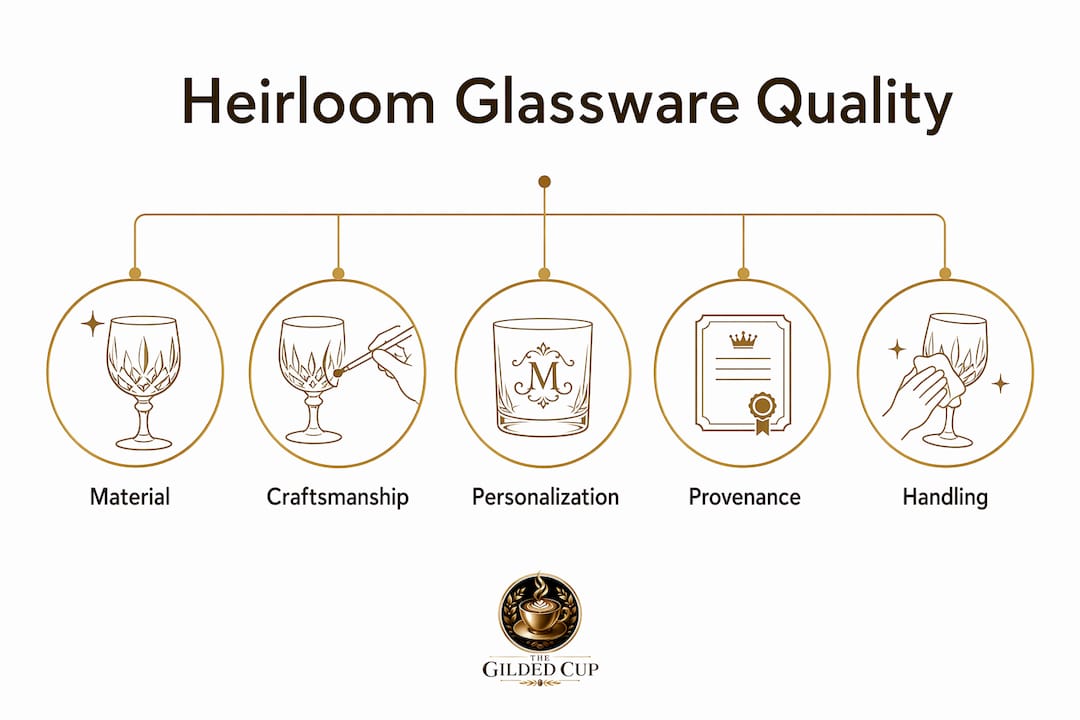
Heirloom glassware is defined by three non-negotiable qualities: premium materials, expert craftsmanship, and timeless design that holds meaning across generations. The industry standard for traditional lead crystal sets the bar at a minimum of 24% lead oxide content (24 PbO), which delivers the high refractive index and dense tactile presence collectors associate with genuine heirloom pieces. Beyond chemistry, heirloom glassware must survive daily use without degrading, carry design choices that never feel dated, and tell a story worth passing down. Understanding what makes glassware heirloom separates a meaningful collection from a shelf of pretty objects.
What defines heirloom glassware: material quality first
The single most reliable indicator of heirloom glassware characteristics is raw material composition. Lead crystal, the gold standard for collectible glassware, contains a minimum of 24% PbO. That lead oxide content raises the refractive index of the glass, which is why lead crystal reflects rainbows when held to light while ordinary soda-lime glass produces only a pale, flat color cast.
Weight and density follow directly from composition. A genuine lead crystal wine glass feels noticeably heavier than a soda-lime equivalent of the same size. That weight is not decorative. It signals structural density, which translates to durability and the kind of resonant acoustic quality you feel when you tap the rim.
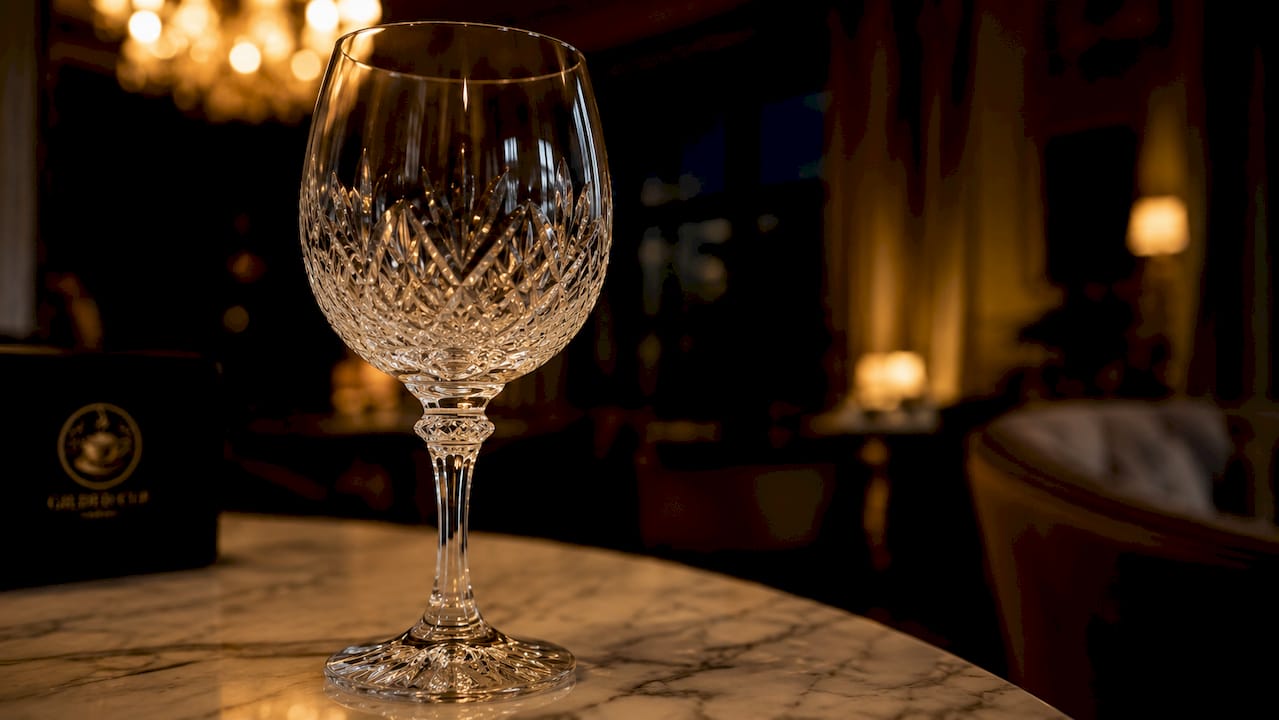
Lead-free crystal formulations, which use barium oxide or zinc oxide as substitutes, can approach similar clarity and brilliance. They do not fully replicate the density or the characteristic ring of traditional lead crystal, but high-grade lead-free options still qualify as heirloom material when paired with flawless production. Borosilicate glass, by contrast, prioritizes thermal resistance over optical brilliance and rarely crosses into heirloom territory for collectors focused on fine drinkware.
Pro Tip: Hold a piece to a single light source and rotate it slowly. True lead crystal will scatter prismatic color across the room. Ordinary glass will not.
| Material Type | Lead Oxide Content | Refractive Quality | Heirloom Potential |
|---|---|---|---|
| Traditional lead crystal | Minimum 24% PbO | Prismatic, rainbow-scattering | Highest |
| Lead-free crystal | 0% PbO, uses barium or zinc oxide | High clarity, less prismatic | High when flawlessly made |
| Soda-lime glass | None | Pale color cast, low brilliance | Low |
| Borosilicate glass | None | Clear but thermally focused | Rarely heirloom grade |
How does craftsmanship determine heirloom quality?
Craftsmanship is where material potential becomes realized quality. Artisan furnaces reach approximately 1,500°C during the glassblowing process. That extreme heat is what allows a skilled glassblower to shape molten crystal into forms with controlled, uniform walls and smooth, fire-polished surfaces.
Hand-blown pieces carry subtle, controlled imperfections that collectors often prize. A slight variation in wall thickness or a faint swirl in the glass body signals human involvement in production. These are not flaws. They are the fingerprints of the maker. What separates them from actual defects is intentionality and control. Large bubbles, sharp mold lines, and uneven rims are production failures, not character.
“Machine-made glassware can achieve heirloom quality when it passes strict criteria: crystal-clear clarity, uniform thickness, a smooth finish, and a brand reputation built on consistent standards. The distinction between hand-blown and machine-made is not automatically a quality judgment. It is a preference between handcrafted uniqueness and machine-made precision.”
The Ring Test is the fastest field assessment for material purity and structural integrity. Tap the rim of the glass gently with your fingernail. High-quality crystal produces a clear, sustained tone that fades slowly. Soda-lime glass produces a dull, short thud. The resonance you hear reflects both the lead oxide content and the absence of internal stress fractures.
For collectors, the checklist of production flaws to reject includes:
- Visible mold seam lines running vertically up the body
- Sharp or unfinished edges on the rim or base
- Uneven wall thickness that distorts the view through the glass
- Large trapped air bubbles or cloudy inclusions in the body
- A base that rocks or sits unevenly on a flat surface
Thegildedcup applies these same standards when curating its collection. Every piece on the platform reflects the artisan drinkware craftsmanship principles that separate decorative glass from pieces worth keeping for decades.
Does personalization make glassware heirloom?
Personalization does not automatically create heirloom status, but done correctly, it is one of the most powerful tools for building lasting value. The critical distinction is method. Engraving cut into the glass surface creates a permanent physical record. Decoration applied on top of the surface, whether printed, painted, or adhesive-based, will eventually peel, fade, or chip.
Properly engraved glassware retains clarity and detail indefinitely. The engraving becomes part of the glass itself. A monogram, a date, or a family crest cut into lead crystal at the right depth will look identical in fifty years as it does today.
Design choices matter as much as technique. The strongest heirloom pieces use balanced typography, intentional placement, and motifs that do not reference passing trends. A geometric border or a classical script monogram reads as timeless. A logo from a specific decade reads as dated within twenty years.
Pro Tip: When commissioning engraved glassware, ask specifically whether the work is wheel-engraved or laser-engraved into the surface. Both can be heirloom grade. What disqualifies a piece is surface-applied decoration, not the engraving method itself.
The emotional dimension of personalization is real and measurable in collector markets. Heirloom glassware’s value builds through repeated use and family tradition, not just material quality. A set of crystal coupes engraved with a wedding date and used at every anniversary carries a different weight than an identical unengraved set. Both are beautiful. Only one becomes irreplaceable.
Key design principles that support heirloom status:
- Motifs drawn from classical or geometric traditions rather than contemporary trends
- Typography that reads clearly at the scale of the piece
- Placement that respects the visual balance of the form
- Personalization that references the person or event, not the era
For guidance on personalizing drinkware gifts with lasting impact, Thegildedcup offers detailed resources on engraving choices and design principles.
How to identify heirloom glassware in a collection or store
Identifying authentic heirloom glassware requires a combination of visual assessment, physical handling, and provenance research. No single test is definitive, but three or four positive indicators together build a strong case.
Visual assessment
Start with clarity. Premium heirloom glassware features crystal-clear clarity with minimal distortion when you look through the walls. Tilt the piece and look through it at a light source. Heirloom-grade glass shows no green or brown color cast. It transmits light cleanly, and lead crystal will scatter prismatic color.
Check for uniform wall thickness by rotating the piece slowly while looking through it. Walls that vary noticeably in thickness indicate lower production standards. The base should sit flat without rocking, and the rim should feel smooth and even all the way around.
Physical handling
Weight is a reliable secondary indicator. Pick up the piece and assess its density relative to its size. Lead crystal feels heavier than you expect for its volume. A piece that feels surprisingly light for its apparent size is likely soda-lime glass regardless of how it looks.
Run the Ring Test immediately after the visual check. A clear, sustained tone confirms material purity and structural integrity. A dull response does not automatically disqualify a piece, since lead-free crystal can produce a shorter ring, but it warrants closer inspection of other indicators.
Provenance and maker reputation
Provenance is the factor most collectors underweight. A piece from a documented maker with a known production history carries authentication that no physical test can fully replicate. Research the maker’s mark, which is typically found on the base of the piece. Heritage glass brands with long production histories are covered in depth in Thegildedcup’s guide to heritage glass brands.
| Identification Method | What to Look For | Positive Indicator |
|---|---|---|
| Visual clarity | Color cast, distortion through walls | No color cast, clear transmission |
| Light refraction | Prismatic scatter when held to light | Rainbow scatter (lead crystal) |
| Ring Test | Tone when rim is tapped | Clear, sustained resonance |
| Weight assessment | Density relative to size | Heavier than expected |
| Maker’s mark | Base marking, production history | Documented heritage maker |
For a broader framework on reading quality signals, the 10 key quality indicators guide from Thegildedcup covers each checkpoint in detail.
Key Takeaways
Heirloom glassware requires a minimum of 24% PbO lead crystal content, flawless production without mold lines or uneven thickness, and either timeless design or permanent surface engraving to qualify as a piece worth passing down.
| Point | Details |
|---|---|
| Material composition matters most | Lead crystal with at least 24% PbO delivers the brilliance, weight, and resonance that define heirloom quality. |
| Craftsmanship sets the floor | Reject any piece with mold lines, sharp edges, uneven walls, or a dull ring when tapped. |
| Engraving must be cut in | Surface-applied decoration fades. Only engraving cut into the glass creates permanent, heirloom-grade personalization. |
| Provenance multiplies value | A documented maker’s history authenticates a piece beyond what any physical test can confirm. |
| Timeless design outlasts trends | Classical motifs and balanced typography preserve a piece’s appeal across decades, not just years. |
Why weight alone won’t tell you everything
Collectors consistently overrate weight as the primary quality signal, and I understand why. Picking up a heavy crystal glass feels immediately authoritative. The problem is that weight tells you about density, not craftsmanship. I have handled pieces that were genuinely heavy and genuinely mediocre, with mold lines running up both sides and a rim that felt like it was finished with sandpaper.
The Ring Test is the check that weight cannot replace. A clear, sustained tone after a light tap on the rim tells you about material purity and the absence of internal stress. Weight tells you about composition. The ring tells you about integrity. You need both signals pointing in the same direction before you commit to a piece.
Provenance is the factor I find most undervalued in casual collecting. A piece with a documented maker’s history and a clear production lineage carries authentication that physical tests can only approximate. I have seen visually identical pieces sell at very different prices, and the difference was almost always traceable to what the buyer knew about where the piece came from.
Care and preservation are where many collectors lose pieces they worked hard to find. Hand-washing in warm water with mild soap is the only safe method for lead crystal. Dishwashers create thermal stress and chemical exposure that cloud the surface over time. Store pieces upright, never rim-down, to protect the most vulnerable part of the glass.
— Sharbel
Fine heirloom glassware, curated for serious collectors
Thegildedcup brings together a curated selection of luxury and collectible glassware built around the same standards covered in this guide: verified material quality, artisan or precision-grade production, and designs that hold their appeal across decades.
Whether you are building a collection from scratch or adding a single statement piece to an existing display, the platform offers detailed product descriptions, high-quality photography, and international shipping to support collectors at every level. Each piece reflects the craftsmanship principles that separate decorative glass from genuine heirloom quality. Visit Thegildedcup to browse the full collection and find pieces that meet the standards this guide describes.
FAQ
What is the minimum lead content for heirloom crystal?
Traditional heirloom-grade lead crystal requires a minimum of 24% lead oxide (PbO) content. That threshold delivers the high refractive index, density, and resonant tone that distinguish crystal from ordinary glass.
How do I perform the Ring Test at home?
Tap the rim of the glass lightly with your fingernail and listen. A clear, sustained tone that fades slowly indicates high material purity and structural integrity. A short, dull thud suggests soda-lime glass or internal stress in the piece.
Can machine-made glassware be heirloom quality?
Machine-made glassware qualifies as heirloom grade when it achieves crystal-clear clarity, uniform wall thickness, a smooth finish, and comes from a maker with a documented quality standard. Production method alone does not determine heirloom status.
What makes engraving heirloom grade versus decorative?
Engraving is heirloom grade only when it is cut into the glass surface rather than applied on top. Surface-applied decoration peels and fades. Properly engraved glass retains its detail indefinitely and becomes a permanent part of the piece.
How does provenance affect heirloom glassware value?
Provenance documents a piece’s maker, production history, and ownership chain. A verified heritage maker’s mark authenticates quality claims that physical tests can only approximate, and it significantly increases a piece’s value in collector markets.