

Caring for Crystal Glasses: A Collector's Care Guide
Caring for crystal glasses is defined as a set of specialized hand-washing, drying, and storage practices that preserve the brilliance, clarity, and structural integrity of fine crystal drinkware. Crystal is not ordinary glass. Its higher mineral content and thinner walls make it far more sensitive to heat, pressure, and abrasion than standard glassware. Hand washing with warm water at 50–55°C and mild detergent is the single most effective method for maintaining crystal’s sparkle. The biggest mistake collectors make is treating crystal like everyday glassware, a habit that leads to clouding, chips, and eventually irreparable damage.
What is the safest cleaning process for crystal glasses?
Hand washing is the only consistently safe method for cleaning crystal glassware. Dishwashers cause surface corrosion and cloudiness through a combination of high heat, harsh detergents, and mechanical vibration. Even a gentle dishwasher cycle creates cumulative damage over time that no polish can reverse.

Setting up your washing station
Skip the kitchen sink. Plastic basins lined with towels provide a far safer washing environment than hard porcelain or stainless steel surfaces. Hard sinks create chip risks the moment a glass makes contact with the basin wall. A padded plastic basin removes that risk entirely.
Use water at 50–55°C. Hotter water causes thermal shock, which stresses the crystal structure. Cooler water does not clean as effectively and leaves residue behind. The temperature range is not arbitrary. It reflects the point at which mild detergent activates without putting the glass at risk.
Step-by-step washing technique
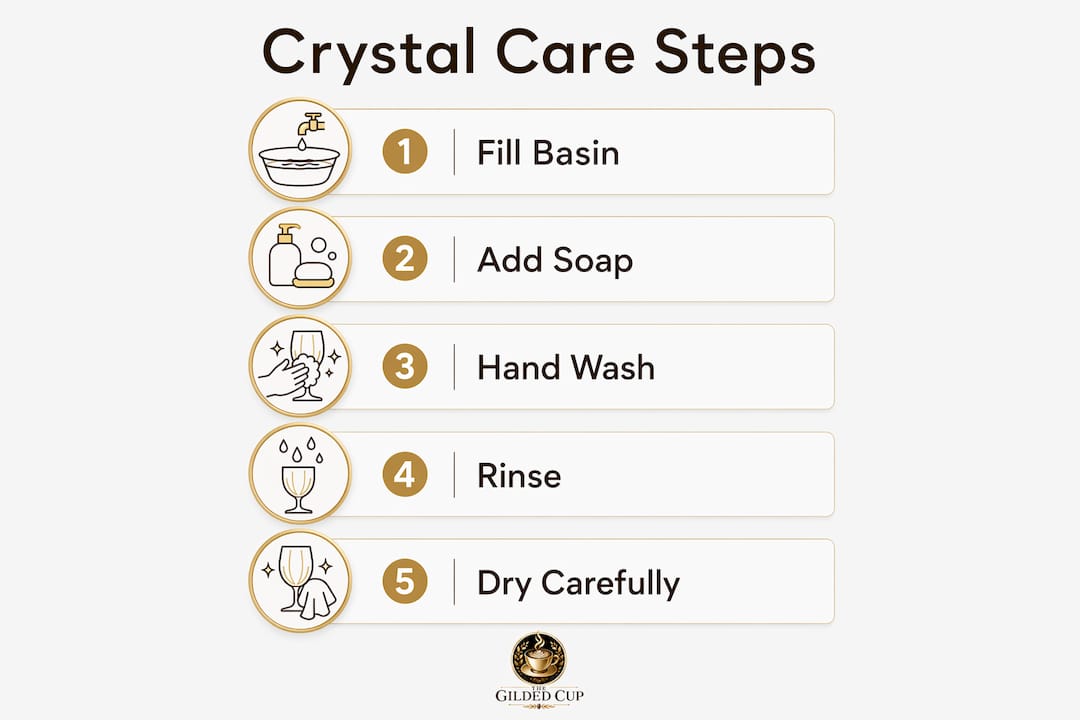
The table below outlines the core steps and the reasoning behind each one.
| Step | Action | Why it matters |
|---|---|---|
| 1 | Fill a padded plastic basin with 50–55°C water and a small amount of mild detergent | Prevents thermal shock and avoids harsh chemical contact |
| 2 | Wash one glass at a time using a soft sponge or lint-free cloth | Prevents glasses from knocking together and chipping |
| 3 | Hold the glass by the bowl, not the stem | The bowl provides control; the stem snaps under lateral pressure |
| 4 | Rinse thoroughly with clean warm water | Soap residue left on crystal dulls its surface over time |
| 5 | Air dry on a soft towel or dry gently with a lint-free cloth | Prevents water spots and avoids mechanical stress |
Pro Tip: Add a drop of dish soap to your basin water rather than applying it directly to the glass. Direct application concentrates detergent in one spot and can leave streaks that are difficult to remove.
How do you handle and dry crystal glasses without causing damage?
The stem is the most vulnerable part of any crystal glass. Twisting or applying lateral pressure during washing or drying creates stress fractures that eventually snap the stem entirely. This is the most common cause of breakage among collectors who otherwise follow good care habits.
The bowl, or crystal parison, is also fragile in a different way. Thermal shock and mechanical stress on the bowl cause irreparable structural damage that shows up as hairline cracks or a permanent loss of clarity. Always support the bowl securely when moving a glass from the basin to the drying area.
Drying do’s and don’ts
- Do use a microfiber or soft linen cloth with minimal pressure if hand drying
- Do prefer natural air drying on a folded soft towel to reduce friction
- Do dry in a room-temperature area away from direct sunlight or heat vents
- Don’t twist the stem at any point during drying
- Don’t use abrasive cloths, paper towels, or rough polishing materials
- Don’t stack wet glasses or lean them against each other while drying
Natural air drying is the lower-risk option for collectors with patience. It removes the human error factor entirely. If you choose to hand dry, use a clean, dry microfiber cloth and work with the grain of any cut crystal pattern rather than against it.
Pro Tip: Support the bowl securely in your palm during all handling phases. Never grip the stem to lift or move a glass. The bowl gives you control; the stem gives you breakage.
What are the best practices for storing crystal glasses?
Storage is where most collectors make quiet, compounding mistakes. Storing glasses upright with rims facing up protects the most delicate edges from pressure marks and microscopic chips. Rim-down storage concentrates the full weight of the glass on its most fragile point.
The comparison below shows why storage method matters more than most collectors realize.
| Storage method | Risk level | Best for |
|---|---|---|
| Upright, rims up, spaced apart | Low | All crystal glasses, daily and collectible |
| Upright with padded dividers | Very low | Fine cut crystal and decorated pieces |
| Rim down on a padded surface | Medium | Short-term display only, not long-term storage |
| Stacked or crowded | High | Not recommended for any crystal |
| Unpadded wooden cabinet, tightly packed | High | Causes scratches and chips over time |
Never stack crystal glasses. The weight of one glass pressing on the rim of another creates chips that are invisible at first but weaken the structure permanently. Leave visible space between each piece. If your cabinet does not allow that, use soft padded dividers made from felt or foam.
Avoid storing crystal near heat sources, in direct sunlight, or in areas with significant temperature swings. Crystal expands and contracts with temperature changes. Repeated cycles of expansion and contraction stress the material at the molecular level, eventually causing surface crazing or cloudiness. For pieces with gold or platinum accents, check out this guide to specialty crystal care for additional storage considerations specific to decorated glassware.
How do you clean crystal glasses with gold or platinum accents?
Crystal with metallic decorative accents requires a stricter care protocol than plain crystal. Gold and platinum rims degrade rapidly when exposed to acidic cleaners or dishwasher heat. Even a single dishwasher cycle can strip or dull a decorative rim that took skilled artisans hours to apply.
The rules for decorated crystal are straightforward.
- Never use vinegar, lemon juice, or any acidic cleaner near decorated rims
- Never place these pieces in a dishwasher, even on the most gentle setting
- Always hand wash with a mild, non-acidic detergent and warm water
- Always rinse with clean warm water and dry immediately with a soft cloth
- Avoid leaving water sitting on metallic accents, as mineral deposits from tap water etch the surface over time
- Avoid abrasive cloths or polishing compounds near decorated areas
The goal with decorated crystal is to clean the glass body without touching the metallic accent with anything other than clean water and a soft cloth. Apply detergent to the bowl and body, then rinse the entire glass gently. Dry the rim area first with a separate soft cloth to prevent water spotting on the metal. For collectors interested in the full spectrum of fine crystal drinkware, understanding how decorative techniques affect care requirements is part of building a lasting collection.
What common mistakes damage crystal glasses most?
The most damaging mistakes in crystal care are also the most common. Recognizing them is the first step toward breaking the habits that quietly degrade a collection over months and years.
- Using the dishwasher regularly. Dishwashers cause long-term cumulative damage including cloudiness and structural weakening that hand washing never causes.
- Holding by the stem during cleaning. The stem is not a handle during washing. Gripping it while scrubbing applies the exact lateral pressure that causes stress fractures.
- Twisting during drying. Collectors who dry glasses by holding the bowl in one hand and twisting the stem with a cloth in the other are the most common source of stem breakage.
- Storing rim-down or stacked. Both methods concentrate weight on the most fragile edges and create chips that compound with every use.
- Using abrasive cleaners or hard brushes. Scratches on crystal surfaces scatter light instead of refracting it, permanently reducing the glass’s brilliance.
No special detergents or cleaning kits are necessary for proper crystal care. Avoiding heat, abrasion, twisting, and the dishwasher protects crystal more effectively than any marketed product. The tools you already have, a soft cloth, mild dish soap, and a padded basin, are sufficient.
Pro Tip: Wash and dry one glass at a time, every time. The moment you rush and handle two glasses simultaneously, the risk of them knocking together and chipping doubles.
Key takeaways
Proper crystal glass care requires hand washing at 50–55°C, stem-safe handling, and upright storage with space between each piece to preserve brilliance and prevent structural damage.
| Point | Details |
|---|---|
| Hand wash only | Dishwashers cause irreversible cloudiness and structural damage even on gentle cycles. |
| Water temperature matters | Use 50–55°C water to clean effectively without causing thermal shock to the crystal. |
| Hold by the bowl | Gripping the stem during washing or drying applies pressure that causes stress fractures. |
| Store upright with space | Rims-up storage with padded dividers prevents chips, scratches, and pressure marks. |
| Skip acidic cleaners | Vinegar and acidic products strip gold and platinum accents from decorated crystal. |
What I’ve learned from years of watching crystal collections age
Most collectors I’ve spoken with treat their crystal glasses as display objects, bringing them out only for special occasions and then storing them away quickly. That habit, while well-intentioned, often leads to worse outcomes than regular careful use. Crystal that sits unused in a crowded cabinet accumulates pressure marks, dust, and the occasional chip from pieces shifting during a cabinet door closing.
The collectors whose pieces look best after a decade are the ones who use their crystal regularly and wash it by hand after every use. The ritual of hand washing, one glass at a time, warm water, soft cloth, no rushing, is not just about cleanliness. It is a regular inspection. You notice a hairline crack before it becomes a break. You catch a water spot before it etches the surface. You handle the piece enough to know its weight and balance, which makes you less likely to drop it.
The other thing I’d push back on is the idea that crystal care requires special products. It does not. Mild dish soap, a soft cloth, and a padded basin cover everything. The luxury glassware cleaning steps that actually work are not complicated. They are consistent. Patience and repetition protect crystal far better than any specialty cleaner on the market.
— Sharbel
Fine crystal deserves the right foundation
Crystal glasses that receive proper care hold their brilliance for generations. Thegildedcup curates a selection of fine crystal drinkware alongside expert guidance on maintaining each piece at its best.

Whether you are building a collection or protecting a set you already own, Thegildedcup offers premium crystal drinkware chosen for both craftsmanship and longevity. Each piece is selected with the understanding that beauty and durability go together when care is done right.
FAQ
Can crystal glasses go in the dishwasher?
Crystal glasses should never go in the dishwasher. Even gentle cycles cause cumulative cloudiness, surface corrosion, and structural weakening that hand washing does not.
What is the best detergent for crystal glasses?
A small amount of mild, non-acidic dish soap is the best detergent for crystal glasses. No specialty products are necessary. Avoid anything with bleach, citrus acids, or abrasive particles.
How should crystal glasses be stored long-term?
Store crystal glasses upright with rims facing up, spaced apart, and ideally separated by soft padded dividers. Never stack them or store them rim-down, as both methods chip delicate edges over time.
How do you remove cloudiness from crystal glasses?
Cloudiness caused by mineral deposits responds to a brief soak in warm water with a small amount of mild detergent, followed by gentle polishing with a soft cloth. Cloudiness from dishwasher damage is often permanent and cannot be reversed.
How do you dry crystal glasses without leaving water spots?
Air dry crystal glasses on a folded soft towel in a room-temperature area away from direct sunlight. If hand drying, use a clean microfiber cloth with light pressure and avoid twisting the stem at any point.